
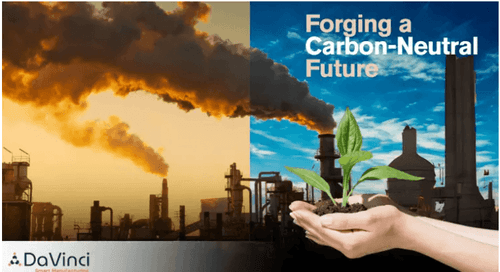
Metallurgy, the ancient art of transforming earth into infrastructure, has long been the unspoken force behind humanity’s ascendancy. From forged swords to skyscrapers, jet engines to surgical tools, metallurgy has enabled mankind to rise, build, connect, and explore.
And yet, beneath its gleaming outputs lies a darker consequence — one no longer possible to ignore. The sector is now among the top emitters of greenhouse gases worldwide, responsible for nearly 7% of global CO₂ emissions.
Steel production alone contributes a staggering 3.6 billion metric tons of carbon annually — more than the entire aviation and shipping industries combined.
Furnaces burn relentlessly. Smelters consume vast energies. Entire process chains are still driven by linear logic, analog systems, and outdated operational paradigms.
What was once the emblem of progress has become one of its most existential contradictions.
The 21st century has made one truth inescapable: industrial strength without environmental intelligence is no longer strength — it is strategic liability.
Consider the shifting terrain:
Metallurgy finds itself at a crossroads: Incremental change will no longer suffice. The moment demands intelligent reinvention.
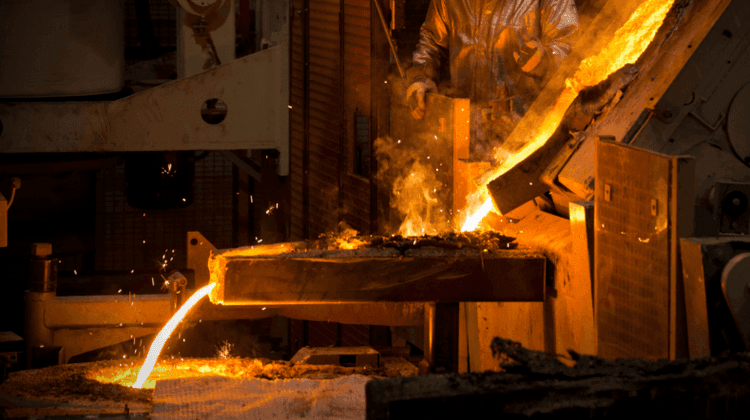
For decades, heavy industry has been governed by a dangerous myth — that environmental responsibility must come at the cost of output, margin, or innovation.
This belief is now demonstrably false.
Today, the convergence of AI, IoT, edge computing, and cyber-physical systems offers metallurgy a new equation:
Productivity and sustainability are not in conflict. They are converging forces — and AI is the medium of their union.
DaVinci is not a dashboard. It is not an energy audit tool. It is a cognitive platform purpose-built to embed intelligence into every layer of metallurgical operations.
Rather than layering analytics onto broken systems, DaVinci rearchitects the industrial stack — integrating artificial intelligence into the thermodynamic core, the material supply chain, the mechanical behavior, and the governance layer.
Its premise is radical:
Sustainability must be engineered. Not appended. Not outsourced. Not estimated. Engineered.
Through real-time optimization, predictive insights, and autonomous controls, DaVinci enables factories that sense inefficiency, learn from it, and correct it — continuously, transparently, and autonomously.
This is not digitization. This is cognitive infrastructure for a carbon-zero industrial age.