
This theme reflects one of the most significant structural changes underway in global steelmaking: a rapid movement toward circular, scrap-intensive production routes. The interest is driven by equal parts economics, carbon strategy, and regulatory pressure. Scrap is a low-carbon raw material. Plants want to maximize recycled content to reduce emissions and cost.
Yet increasing the proportion of scrap in primary or secondary steelmaking introduces higher thermochemical variability, more complex charge behavior, and operational risks that conventional control systems were not designed to manage. The transition toward circularity, therefore, is becoming as much a digital challenge as it is a metallurgical one.
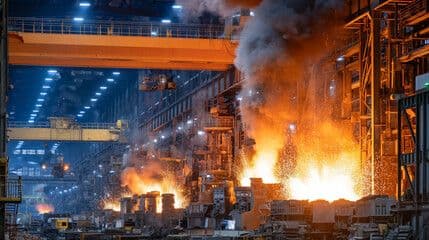
Scrap is not a uniform feedstock; it is a thermochemically unpredictable material. Variations in density, coating, contamination, tramp-element concentrations (Cu, Sn, Cr, Mo), residual moisture, and yield loss alter the thermal demand of each basket in the melting sequence. For electric arc furnaces, this variability leads to nonlinear melting kinetics, erratic slag foaming, arc instability, and unpredictable energy trajectories. For BOFs and hybrid converters, high scrap ratios alter oxidation-reduction pathways, decarburization intensity, and reaction heat.
Without detailed knowledge of scrap composition and its heat-specific behavior, plants counter uncertainty with high energy buffers excess superheat, longer power-on time, and increased oxygen consumption. These inefficiencies accumulate into measurable kWh losses, additional CO₂ emissions, and reduced metallic yield.
Digital transformation is redefining how scrap is understood. Advanced scrap characterization tools vision systems, bulk-density analytics, radiographic scanners, and predictive composition models translate heterogeneous scrap streams into structured data. These systems allow operations to shift from static, assumption-based scrap management to dynamic, heat-by-heat predictions of melting time, oxidation behavior, slag volume, and residual carryover. Instead of treating each basket as an unknown thermal load, digital models quantify its metallurgical behavior before melting begins, enabling operators to tailor burner settings, oxygen profiles, and tap-to-tap sequences more precisely.
The introduction of higher scrap ratios demands a deeper understanding of furnace thermochemistry. Digital furnace intelligence extends beyond conventional sensors, integrating off-gas calorimetry, harmonic arc signatures, foamy slag indicators, scrap collapse timing, and refractory heat flux models. This data allows predictive engines to forecast energy requirements with greater accuracy, anticipate melting transitions, stabilize slag behavior, and avoid overheating. In scrap-intensive EAF and BOF operations, predictive systems convert chaotic melting behavior into a manageable, optimized thermal profile reducing power consumption, minimizing re-melts, and extending refractory life.
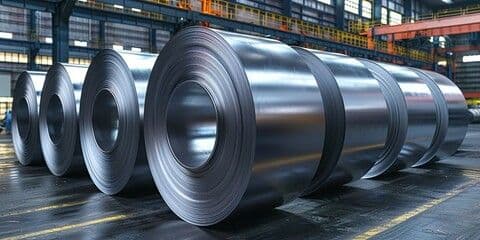
Circular steelmaking requires more than operational efficiency; it requires auditable material traceability. Customers increasingly demand proof of recycled content, verifiable CO₂ intensity, and cradle-to-gate visibility. MES platforms serve as the backbone of this traceability by linking scrap inputs to heats, heats to ladles, and ladles to final products. By capturing scrap origin, classification, metallic yield, energy consumption, and carbon footprint per heat, MES ensures that recycled content claims are defensible and compliant with emerging reporting standards. This creates a certified record of how much scrap a plant truly used and how that scrap influenced energy, cost, and emissions.
The shift toward scrap-based metallurgy is now unavoidable. As the cost of primary ore-based steelmaking rises both financially and in carbon terms scrap emerges as the most accessible lever for near-term decarbonization. But maximizing scrap content requires precise control of thermochemical variability, real-time decision intelligence, and full lifecycle traceability. These are challenges only digital systems can solve.
Scrap is a low-carbon raw material. Plants want to maximize recycled content to reduce emissions and cost.
Digital tools make that ambition operationally viable turning scrap from a variability burden into a decarbonization advantage.