
For decades, manufacturing leaders have optimized operations using a familiar financial lens focused on energy cost in manufacturing. Energy cost per unit, total consumption, peak demand charges, and utility spend have shaped investment decisions, performance reviews, and operational priorities.
These metrics remain relevant.
But by 2026, they are no longer sufficient.
Manufacturing now operates in an environment where energy use carries implications beyond cost alone. Carbon cost in manufacturing has emerged as a measurable operational consequence, shaped directly by how plants are run, stabilized, and recovered under real-world constraints.
The shift from energy cost to carbon cost, or carbon cost vs energy cost in manufacturing, does not represent a new reporting requirement. It represents a more complete understanding of operational performance.
Energy cost has traditionally been treated as a financial outcome. Reduce consumption, improve efficiency, renegotiate contracts, and margins improve.
That logic still applies. What has changed is the context in which energy is consumed.
Manufacturers now face:
Under these conditions, two production runs with identical energy costs can exhibit materially different carbon footprints. Conversely, slightly higher energy expenditure at the right moment can reduce overall emissions exposure.
Energy cost explains spending.
Carbon cost explains impact, variability, and operational risk.
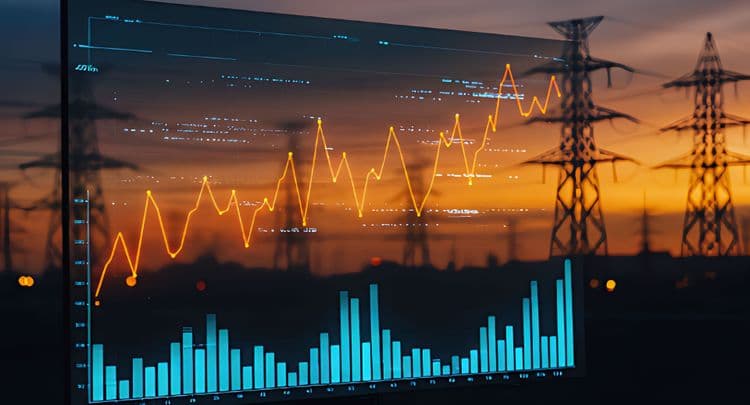
Carbon cost should not be viewed as a competing KPI. It is an overlay that adds meaning to existing energy metrics.
Leading manufacturers are not discarding energy KPIs. They are contextualizing them to reflect how operations actually behave.
Energy metrics are typically averaged across time. Carbon behaves very differently.
For example:
Carbon cost exposes operational variability, which is where the majority of improvement opportunities reside.
Historically, carbon was calculated retrospectively. Sustainability teams aggregated energy data, applied emission factors, and reported outcomes on a quarterly or annual basis.
That approach no longer aligns with operational reality.
In 2026, carbon matters most when:
At these moments, carbon is not a compliance metric. It is a decision variable.
Manufacturers that can view carbon cost alongside production, quality, and energy metrics gain the ability to manage trade-offs consciously rather than discovering consequences after the fact.
The transition from energy cost to carbon cost introduces a new class of execution-level metrics, including:
These metrics do not add complexity. They sharpen operational insight.
They help teams identify which decisions materially influence emissions and which variables deserve attention.
One of the most constructive outcomes of carbon-aware operations is that sustainability improvements often coincide with stronger operational performance.
Manufacturers that manage carbon at execution level frequently observe:
Carbon becomes a diagnostic signal that highlights inefficiency, rather than a constraint that limits performance.
Carbon cost cannot be managed effectively through spreadsheets or disconnected sustainability platforms. It requires operational context.
That context includes:
This is why carbon cost is increasingly anchored in execution systems rather than reporting tools.
At DaVinci Smart Manufacturing, experience across energy-intensive manufacturing environments shows that when energy and emissions data are embedded directly into execution workflows, carbon becomes visible, explainable, and actionable.
Not as a compliance obligation, but as an operational signal.
By 2026, manufacturers that understand carbon cost at process level gain more than regulatory readiness.
They gain:
Most importantly, they gain decision latitude. The ability to balance cost, carbon, and performance deliberately rather than reacting to outcomes after production is complete.
The shift from energy cost to carbon cost does not require a fundamental redesign of operations.
It begins with:
Manufacturers that adopt this mindset are not simply responding to external expectations. They are building more transparent, resilient, and disciplined operations.
Energy cost will remain a foundational metric in manufacturing. But it no longer tells the whole story.
Carbon cost introduces the missing dimension. It reveals variability, exposes inefficiency, and supports more informed decision-making under real operating conditions.
The transition from energy cost to carbon cost is not an administrative burden.
It is an opportunity to operate with greater clarity, confidence, and control.
For manufacturers willing to adopt these metrics, it is rapidly becoming a source of sustained competitive advantage.