

In many manufacturing operations, quality systems are highly effective at detecting defects but far less effective at preventing them. Across the plants we worked with, inspection systems consistently identified non-conforming product, yet 70 to 90 percent of total quality-related cost was already incurred by the time defects were detected. Scrap, rework, and lost capacity were unavoidable because quality deviation in the manufacturing process was discovered only after value had already been added.
When manufacturers shifted quality decisions upstream using Industrial AI–based quality deviation detection, they reduced scrap and rework by 12 to 22 percent, improved first-pass yield by 4 to 9 percent, and significantly reduced quality-related firefighting. This paper explains why traditional quality approaches stalled, how quality deviation detection actually worked in practice, and what changed on the shop floor once teams could see instability earlier.
Across most plants, quality control relied on a familiar combination of end-of-line inspection, SPC charts, and periodic audits. Vision systems and gauges accurately flagged defects, and SPC charts monitored key parameters such as temperature, pressure, speed, and torque. From a compliance perspective, these systems were doing their job within traditional quality control frameworks.
Operationally, however, they were late. In discrete and process manufacturing environments alike, quality teams reported that quality deviation in the manufacturing process often began 40 to 90 minutes before defects appeared at inspection. In high-throughput lines, this meant that hundreds or thousands of units could be produced under unstable conditions before the issue was detected. By the time inspection flagged the problem, scrap was locked in and rework capacity was already under pressure due to delayed quality deviation detection.
Quality teams were not failing to detect defects. They were failing to detect the start of instability early enough through effective quality deviation detection.
The core limitation of traditional quality systems was not a lack of data, but how that data was evaluated. SPC and rule-based systems monitor parameters individually, each against its own control limits. This works well for catching large, single-variable failures, but it consistently misses early-stage quality drift and delays effective quality deviation detection.
In real manufacturing processes, deviations rarely occur because one parameter crosses a limit. Instead, quality deviation in the manufacturing process emerges when multiple parameters shift together, each remaining within its acceptable range while collectively pushing the process into an unstable state. Across plants, quality engineers found that many defect events were preceded by subtle interactions between three to five correlated variables. None of these variables appeared abnormal on their own, which is why SPC charts remained green while quality deteriorated and early quality deviation detection did not occur.
As a result, operators reacted only after defects became visible. By then, corrective actions were larger, more disruptive, and more expensive, increasing scrap, rework, and operational instability.

Industrial AI approached quality control by modeling process behaviour, not inspection outcomes. Instead of reacting to defects, quality deviation detection focused on understanding how stable manufacturing processes actually behave over time. Historical production data was segmented into periods of stable operation and periods that led to defects, scrap, or rework. Rather than learning fixed thresholds, the system learned what normal operation looked like across combinations of variables under different products, shifts, and operating conditions.
In practice, quality deviation detection in manufacturing processes worked by continuously evaluating multiple parameters together, including:
This approach shifted detection significantly earlier. Across plants, quality deviations in the manufacturing process were identified 30 to 60 minutes before defects appeared at inspection. In high-speed production environments, early warnings were generated within 10 to 15 minutes of deviation onset, while products were still recoverable and corrective action was possible.
Early quality deviation detection alone did not improve outcomes. What mattered was whether teams could act confidently on those signals. Instead of vague alerts, deviation notifications explained which parameters were contributing most to the drift and how those parameters were trending relative to stable operation within the manufacturing process.
This visibility changed operator behaviour. Instead of trial-and-error adjustments, operators focused on a small set of variables most likely to stabilize the quality deviation in the manufacturing process. Across plants, the average time from deviation onset to corrective action fell by 50 to 70 percent. Because interventions occurred earlier, adjustments were smaller and less disruptive, reducing downstream variability and quality loss.
Quality engineers also changed how they worked. Rather than investigating defects after the fact, they reviewed quality deviation detection patterns during production and adjusted control strategies proactively to prevent instability from escalating into defects.
The operational impact of earlier quality decisions driven by quality deviation detection was consistent across plants.
Financially, these improvements translated into $500,000 to $2 million in annual quality cost reduction per production line, depending on throughput and scrap value. Importantly, these gains were achieved without additional inspection equipment, increased sampling, or tighter control limits, reinforcing the value of upstream quality deviation detection rather than downstream inspection.
Adoption metrics further reinforced the impact. Daily usage of deviation detection tools increased by 2 to 3 times, and AI-based quality insights were incorporated into shift handovers and quality review meetings within the first three months of deployment, embedding quality deviation detection into day-to-day manufacturing decisions.
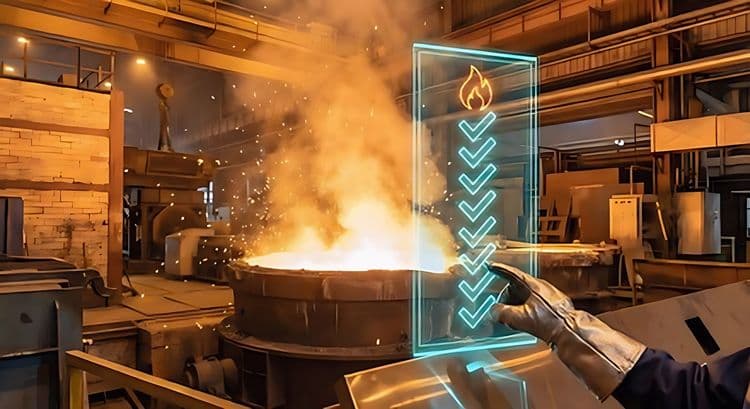
Across plants, quality performance improved when decisions moved upstream through effective quality deviation detection. Inspection systems remained essential for compliance and confirmation, but they were no longer the primary defense against quality loss in the manufacturing process. Teams stopped asking whether a product was defective and started asking whether quality deviation in the manufacturing process had begun and whether the process was still stable.
The most successful deployments treated quality as a dynamic control problem rather than a static inspection problem. Quality deviation detection systems that reduced uncertainty for operators and engineers delivered measurable results. By contrast, systems that generated more alarms without actionable insight did not improve manufacturing quality outcomes.
Quality problems rarely begin at inspection. They begin quietly upstream, as quality deviation in the manufacturing process causes operations to drift out of stable behavior long before defects become visible. Industrial AI delivers value when it enables early quality deviation detection, helping teams recognize instability sooner and act while recovery is still possible. Platforms such as DaVinci Smart Manufacturing apply these principles by modeling process behavior to surface early signals of drift. Scrap and rework fell not because inspection improved, but because quality decisions happened earlier and with greater confidence across the manufacturing process.